Showing posts with label book club. Show all posts

Tuesday, August 10, 2021

Tuesday 4

Here's another set of questions from the Tuesday 4. Play along if you like.

1. Reading anything good lately?  How about magazines? Do you buy any?

I recently reread, The Missing Piece of Charlie O'Reilly by Rebecca Ansari with my book club. This is a children's book but my book club liked it and it garnered a fair amount of discussion. I first picked it up after hearing about the premise that Charlie remembers his little brother, Liam, but no one else does. It was as if he hadn't existed. I won't go into the story any more so as not to give any spoilers in case anyone decides to read it. Suffice it to say, the book weaves an interesting, complex, and well written story.

As far as magazines, my husband gets a woodworking magazine which he enjoys for the tips and plans it has. I enjoy perusing it, too. 

2. Do you belong to any clubs, societies, or do you meet with friends regularly to chat?

I don't belong to any formal clubs or societies except my book club. I have other groups of people with whom I meet from time to time to catch up. Because of COVID, I have a lot of catching up to do with some of these groups.

3. Where are you from originally and if you moved why did you move? 

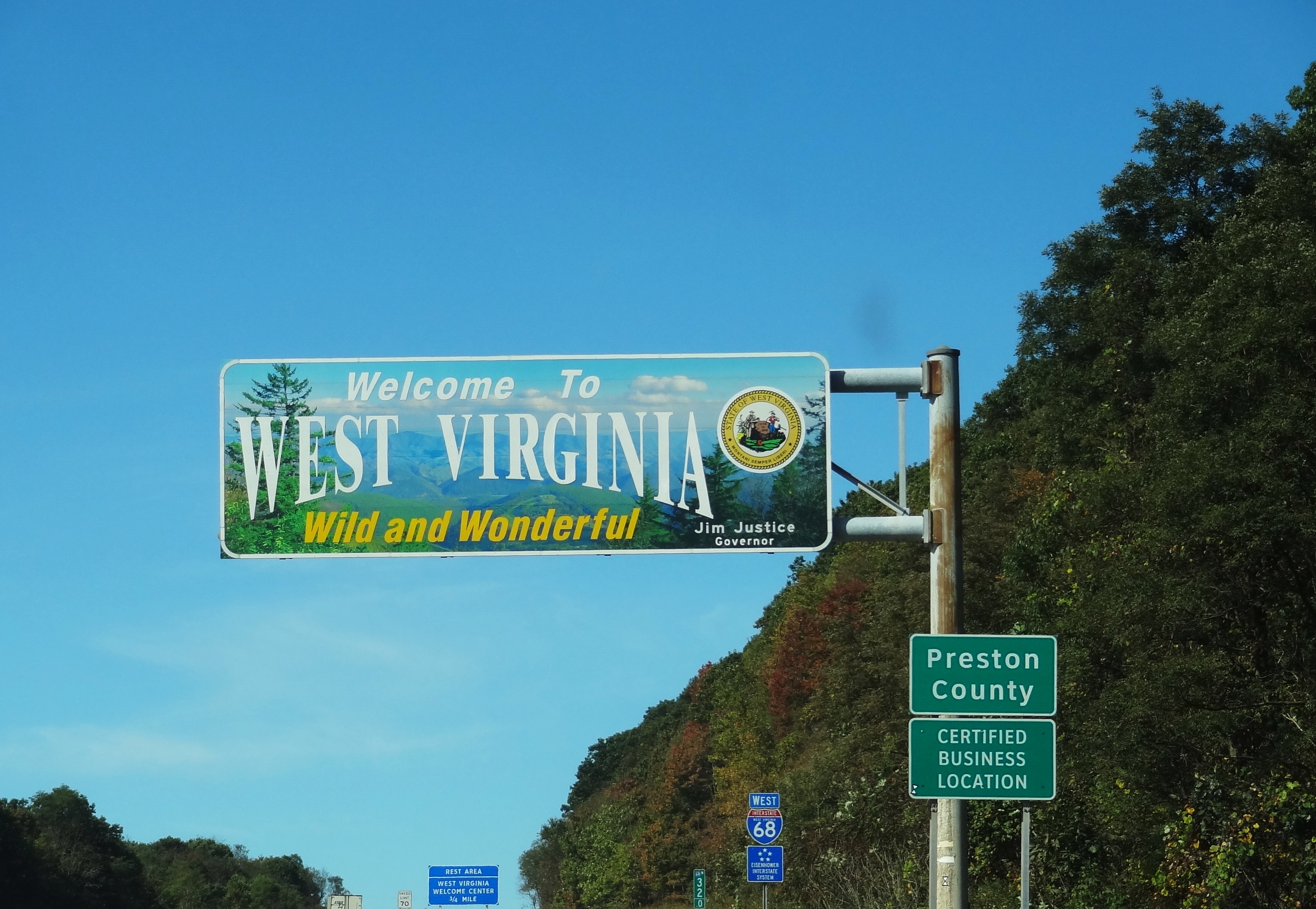
If you visit here very often, you know that I grew up in West Virginia. I have also lived in Virginia, New Orleans, and Houston, along with Maryland where I have lived for the last 20 years. All of these moves were because of jobs.

4. Do you like a good Western Movie? Who was your favorite movie/TV Cowboy?

I used to enjoy a good Western movie, but I haven't watched one in a long time. When I was growing up, we watched Gun Smoke every Monday night at 8 pm. I still enjoy checking in with it from time to time in reruns. But I think my favorite was/is the Rifleman because Chuck Conner reminds me of my father.


Wednesday, April 25, 2018

V is for a Very Good Book

or what is Destiny of the Republic by Candice Millard

This is a well written, fascinating story about the rise of James Garfield and his untimely death.

Millard tells of Garfield's very poor childhood, his education, his time in the Civil War, and his nomination for President despite the fact that he has no desire for the nomination. Then the story really begins. Crooked politics, arrogant doctors, a mentally ill man, and a brilliant scientist all figure into Garfield's six short months in office. Add in a "puppet" Vice President, a letter-writing invalid, and a sweet love story at the end and you've got a book. There are so many facets to this tale, that if it had been a fiction story, I would have thought that the author was being too dramatic. Destiny of the Republic proves the saying, "Truth is stranger that fiction."

My only criticism of the book was that occasionally it would seem as if the author was going off on a tangent. But usually these tangents were background for an upcoming part of the story. Also, I found it hard to read some of the medical practices with my current medical sensibilities.

Destiny of the Republic was originally recommended by an acquaintance and later we read it in my book club. Everyone in the club liked it even those who didn't think they would. So if you want to brush up your history, I'd recommend this very good book.


Thursday, February 1, 2018

On My Nightstand

If you're like me, there's always more out there to read than you can get around to. And it doesn't help that these days, reading is often sleep inducing for me. However, that doesn't mean that I don't try to keep up. Here are the books I'm currently reading, browsing, looking at the pictures in, and sleeping with.


From Bottom to Top:

1. The Beginner's Guide to Starting a Garden by Sally Roth
I first got this book from the library, but liked it enough that I asked for it for Christmas. It is basically landscaping with common plants that people often give away. It has designs and tips for beds and gardens that seem practical and I could make. We have several beds that need reworked in our yard and I thought this would be a great reference.

2. The Edible Garden, a Sunset book by Hazel White and Janet Sanchez
I received a gift certificate for Christmas to an edible landscape company. I have a tree in mind that I want to get, but wanted to do some more research before I made any decisions. So when I ran across this book at the library, I brought it home for more study.

3. The Family Handyman
I brought home this magazine from the library because it had an article on a deck makeover, a project that we want to do at some point.

4. Laughter, the Best Medicine II, Reader's Digest
Remember this feature in Reader's Digest? I guess it's still there, actually, but I'm not sure since I haven't seen a Reader's Digest in a while. Anyway, I picked this book up at a used book sale to have some light, quick reading. It's the perfect bathroom reader or easy reading to go to sleep by.

5. The Beautiful, Edible Garden by Leslie Bennett and Stefani Bittner
Another book I checked out from the library to do a little more research before I decide what to buy with my gift certificate for edible plants.

6. The Golem and the Jinni by Helene Wecker
This is the book I read last month for my book club and needs to taken back to the library. The club agreed that it was a good book and enjoyed it. The basic story has a golem and a jinni stranded in New York City in 1899 without their typical masters and abilities. There are many levels to the story from the golem and jinni trying to survive in the human world anonymously to commentary on the immigration experience. It provided a lot of discussion for my club.

7. Why We Sleep by Matthew Wallace
This is a current popular book by Matthew Wallace, PhD, a sleep researcher. His goal with the book is to help people understand what sleep is and how important it is to our health and well being. I've just started the book, but I am already learning a lot.

8. Big Little Lies by Liane Moriarty
This is my book club's selection for February. The book itself got very good reviews and the Netflix series based on it has won a lot of awards. I may the last person around to read it; so far I find it engaging.

Are you a read-one-book-until-it's-finished kind of person or a read-several-books-at-once sometimes finishing one of them kind of person? What does your nightstand look like?


Sunday, December 17, 2017

Ornament Time 3

For the next few posts, I will be featuring ornaments from my Christmas tree.  This is one way I can savor these decorations that only come out once a year. Each post will feature a group of ornaments related by a common theme. 

The Ornament Parade: Book Club

I have belonged to the same book club for 12 years now. Besides reading interesting books and  having lively discussions, each December we go out to dinner and a show. During our evening out, the leader has a small gift for us and several of these gifts have been ornaments. Sometimes they are book themed and sometimes they are not, but they're always pretty.

Below are pictures of them.  Just for fun, do you know what book is being quoted on the open book ornament?


But Wait, There's More!

Here's a quick review of some recent books we've read in my book club recently:

We Never Asked for Wings by Vanessa Diffenbaugh

This is a fiction book about a mother who suddenly has to care for her 15 and 6 year old children after her parents move. The club liked the book and thought it was well written although a few didn't like the behavior of some of the characters.

A Piece of the World by Christina Baker Kline

This is historical fiction about Christina Olson, who was the subject of several Andrew Wyeth's paintings. The club found it an interesting read though depressing at times. It provided a good discussion as the book was put in context of the rest of the Wyeth family.

Prisoners of Geography-Ten Maps That Tell You Everything You Need to Know About Global Politics by Tim Marshall

Marshall explores 10 crucial regions of the world explains how geography affects the actions of the countries in them. I'm not sure that anyone had finished this book by the time we discussed it. Many found it tedious reading unless you were very familiar with the region being discussed. For example, I found the US discussion interesting but the China chapter less so. Many loved the concept of this book, but didn't find its format friendly for them.

Until next time...


Friday, August 26, 2016

This and That

Here it is. Just what you wanted. A small sample of the thoughts swirling in my head this morning. I'm trying to include only ones that might make sense to the outside world--meaning no explanation of weird dreams although I have done that before.
A few of my swirling thoughts
(or what happens when you drop your camera in water.)

--The paperwork on the house is slowing down. Yesterday, there were only two emails concerning the purchase, and two phone calls concerning work to be done. The day before we took a break with only one email. I've talked with several people and no one ever remembers having this much paper work when they bought a house. There seem to be a lot of new regulations, both local and national, to protect us--or annoy us depending on your perspective.

--The getting-rid-of-stuff continues in full force. Since we signed the contract for the new house almost three weeks ago, we have given away four loads to various thrift shops, two loads to charities who sent trucks to the house, 14 boxes of books to the library, various items to friends and family, and a truckload of things, including a boat, to a scrap metal yard. We are not being brutal with giving away our things, but after 19 years a in house, even with regular purging, stuff accumulates. There is plenty more to do in this area.

--Whoever thought hot flashes were a good idea? Probably the same people who thought up menstrual cramps. Sometimes these natural processes are not so fun.

--My book club recently read A Man Called Ove by Fredrik Backman, and it got a thumbs up from everyone. It's hard to describe the plot without giving too much away or without it sounding like a depressing book that you wouldn't want to read. (That's what happened when I tried to tell Aunt Martha about it.) It is an easy, humorous read with a feel good message that just happens among some depressing situations. The main character, Ove, has had some back luck and decided that life is not worth living. However in his attempts to end it all, things happen until his life is transformed for the better. Ove is the type definition for the word curmudgeon, however I loved him. This was a book I read a little at a time because I wanted to come back every day and have a visit with him. As you can tell I recommend the book, but it's pretty popular right now, so it might take some time for you to find at the library. You might want to put a hold on now if you're interested.

--Oh my. I've just gotten started and my computer time is up. Time to get the recycling out, feed the cats, and get ready for work

Have a great day. That's my plan.


Tuesday, May 6, 2014

What am I reading?

It seems as if I've been checking out a lot of books from the library recently, so I gathered them up to make sure that I could find them all. Success! I haven't lost any although one is overdue. Just for my own curiosity's sake, I've summed up what I've been reading (or at least browsing) these days.


The Backyard Lumberjack by Frank and Stephen Philbrick.
Ward's family does a lot of tree trimming, felling, and log splitting, so I was curious to see how their methods compared to what was in this book. Ward read more of this book than I did, and one of the interesting facts he found in it was that different regions stack their wood differently.

My Dog May Be A Genius by Jack Prelutsky
This is one of several books I checked out in honor of National Poetry Month during April. 
Jack Prelutsky was the first ever U.S. Children's Poet Laureate and his books never disappoint. The poems in this book were humorous and clever, and James Stevenson's illustrations accompanying them were just right.

Edgar Allan Poe's Pie: Math Puzzlers in Classic Poems by J. Patrick Lewis
This children's book caught my attention because the title contained two of my favorite subjects--Edgar Allan Poe and math puzzles. The book uses classic poems to inspire other poems that have a math puzzle in them. I only wish that Wally and Theo were younger because this is just the kind of book that we enjoyed together as a family while they were growing up. Maybe the next time that we are all together, for old time's sake, we'll read a few these poems. Then we'll put on our thinking caps and solve the puzzles.

Picnic, Lightning by Billy Collins
Billy Collins has also been a U.S. Poet Laureate, but for adults. He is the master of describing every day scenes in free verse poetry. I don't always understand free verse poetry and much of it sounds the same to me. However, the poems in this book are different and I liked most of them. 

Fully Woolly by Ellen Warwick
My interest in this kid's book of wool projects was inspired by the recent Sheep and Wool Festival I went to. The projects are of various difficultly levels and none of them seem too simplistic for an adult even though they were designed for children. I hope to use some of the ideas from this book soon.

Clean Cuisine by Ivy and Andrew Larson
I usually avoid diet/eating advice books because most of them swear that their way is the only way and use "science" to prove that they are right. However, I picked this book up on an impulse one day when my joints were hurting because it is an anti-inflammatory program. Turns out that I really like it because it fits with my basic philosophies for most things--"Everything in moderation" and "Variety is the spice of life." So far, I am in the middle of reading the nutrient discussions and find that most of it makes a lot of sense to me. I don't know if I will follow the program outlined in the latter part of the book, but for now it's not a bad idea to be reminded that leafy greens are really good for you.

The Aviator's Wife by Melanie Benjamin
This was the most recent book that my book club read. The Aviator's Wife is historical fiction about Anne Morrow Lindbergh, wife of Charles Lindbergh-the first person to fly across the Atlantic. The book is fiction but most everything in it is based on historical facts. The fiction parts are when the author fills in what she thinks might have been the private thoughts and conversations that were not recorded in the books and diaries of the Lindberghs.  The group as a whole, including me, found the book very good--well written with very interesting subject matter. Charles Lindbergh was not always a likeable person, so it was not always a pleasant read. However, it was compelling.

Digging to America by Anne Tyler
This is the current month's selection for my book club. It is a novel about differences of cultures and family styles. It begins when two families meet after both adopt a baby from Korea that arrive on the same day. All of the families live in the US, but one of them has recent roots in Iran. I haven't gotten very far, but so far I like it. I'll let you know the final verdict once I've finished.

Lots of Limericks selected by Myra Livingston
This is a book of limericks selected by Myra Livingston. It is for children, so you won't find any ditties like, "There once was a man from Nantucket..." in here. It was a fun read.

Charleston--Fodor's In Focus
We're in the early stages of planning a family vacation and this book caught my eye with regards to that. A friend recently moved to Charleston, SC, so I wanted to learn more about the area. I plan to visit there sometime whether it is this year or not.

So there you have it--a little of this and a little of that. I wonder what will catch my eye this week at the library? What are you reading these days?


Saturday, July 20, 2013

The Good Earth--a book review


I've been meaning to read The Good Earth since I first heard about it in grade school. The author, Pearl S. Buck, was born in West Virginia and was part of my WV history lessons back then. This month I finally joined the other millions (billions?), who have read the book when I read it as part of my book club.

The Good Earth was published in 1931 and follows the life of Wang Lung in pre-revolutionary rural China. The book begins with a young Wang Lung preparing for his wedding day and follows his life until he is old and close to death. He values the land and farming above all else which leads him from humble beginnings to being a rich man. Along the way, we see him suffer through famines and personal hardships and watch the way his eventual wealth affects him and the next generation.

This book has been a classic since it came out. It won a Pulitzer Prize and also helped Buck win the Nobel Prize for Literature. (And if that weren't enough, it was chosen for Oprah's Book Club a couple of years ago). What all of this means is the book has been studied and talked about for decades now. Its historical significance and literary merits have been debated by many scholars as well as high school students. So there's a lot of information out there you can read for an in depth analysis of it. However, in the meantime I'm going to tell you what I thought about it when I read it as an afternoon pleasure read.

Buck's writing style is what impressed me the most about this novel. She writes in a simplistic way about profound events. It reminded me of Bible stories where powerful stories are told with just the simple facts. When I was describing this to Theo he said, “You mean she tells you the story, but doesn't tell you how to feel about it.” And I think that is a good description. But among this simple story telling are very rich details about Chinese culture which also play a major role in the plot. All in all, it is a very compelling read.

I thought the book could have ended sooner than it did. It seemed to me that the story plodded along a little longer than it needed to. However, another member of the club thought that Buck was slowing down the story just as Wang Lung's life did as he aged. In retrospect, this made a lot of sense to me. Maybe it ended at just the right time.

What did the other members of the club think? Everyone liked the book, including me, and it provided a good discussion. This is not always the case when everyone likes a book.

Recommendation: If you are one of the few like I was who have not read The Good Earth, give it a try. Unlike some classics, it is an easy, enjoyable read, but like many classics, it will give you much to reflect on.
_______________________________________________________________________________
But Wait, There's More:

--The Good Earth is the first book in a trilogy about this family. It is followed by Sons and a House Divided.

--I don't like to give away much of the story when I do a review, so I don't do that here. However, if you'd like to know more about The Good Earth, read here.


Monday, May 20, 2013

"Zero"--a book review

This month's selection for my book club was Zero-the Biography of a Dangerous Idea by Charles Seife. This is a nonfiction book that discusses the history of numbers and their place in society focusing on the ever important concept of zero and its partner infinity. Now if you're not a math person, don't stop reading yet. Seife has masters degrees in math and journalism and takes a seemingly dry subject and makes it a very interesting read. He starts in the beginning with the use of numbers to count things and goes to present day with string theory and such. 

First let me tell you what background knowledge I brought to the book, so you can put my perceptions in context. I had the basic science and math courses in college of physics, chemistry, and calculus. I didn't have any advanced courses in these areas. However, I am married to someone who reads math and physics books for fun, so if you can learn anything by osmosis, I should know a lot. I found the book an interesting read for several reasons.

I had never thought about the evolution of numbers and their use. I guess I just assumed that all of them had always been there, including zero. However, that was naive. They have evolved over time just as our scientific ideas have often hand in hand--which makes perfect sense if I'd ever taken time to think about it. Also, I had never thought about the beautiful or sinister (depending on your point of view) concepts of zero and infinity in a religious sense. There have been a lot of differing ideas of whether God created things from something or from nothing and whether there is a beginning and ending to the universe. Many men and societies survived or didn't depending on their views on this subject and what was politically correct at the time. Also, the book reads like a who's who of the big players throughout time in the science and math world. However, Seife does more than discuss their math contributions. He tells about the life they were living and how their work affected their life. It is very much a history book in all of these ways.

Zero is also a math book. As Seife describes each new concept as it was discovered, he gives very understandable examples of that concept in every day terms. He seems to have a real gift for this and I think his examples could be used in the classroom to make things clear and relevant to students.

Now after all of that praise, let me tell you the rest of the story. The book can be a quick and easy read. At least that was how it was for the math professor in our group. However, I found it a fast read if I didn't try to completely understand the examples or a tedious read when I was trying to understand them--especially toward the end when they were getting more complex.

What did the others think about Zero? Some commented that there may have been other sides to the story, especially in the religious context, than were presented by Seife. However, most of the other comments were favorable. They thought it was well written and the subject matter interesting. Out in the rest of the world, it has won awards and has gotten favorable reviews from most of the major newspapers.

Would I recommend the book? Yes, but I wouldn't call it a beach-read type book for the average person. I plan to read it again and savor all of the fascinating information it has to offer. (Especially when I have trouble sleeping.)
___________________________________________________________________________________

But wait, there's more:
In the latter parts of the book, it talks about many things that I have heard referenced on The Big Bang Theory. I now understand better what Sheldon and Leonard are often talking about.

But wait, there's even more:
If you want to know more details about the book, read here.


Thursday, May 2, 2013

"The Language of Flowers"--a book review


Last month our book club read The Language of Flowers by Vanessa Diffenbaugh. The book revolves around Victoria, who grew up in the foster care system, and what happens to her when she is emancipated at age eighteen. It is not so much about the foster care system but how Victoria's time in foster care affects her life choices. The story switches back and forth from present day to when she was 10 years old and living with Elizabeth, who wanted to adopt her. Elizabeth teaches her the language of flowers—the Victorian idea that each flower and plant represents an emotion or idea. This connection to flowers helps Victoria find her way in the real world.

The story is simple in some ways. There are a limited number of characters and a lot of foreshadowing. But in other ways, it is complicated. Because of Victoria's background, she doesn't react and behave as most people would expect. This creates suspense and anticipation in the novel.

What did my book club think about the novel? Everyone liked it. In fact one person said that it was the best book she had read in a long time. She considered it a page turner. But to be quite frank, I don't remember a lot of the discussion because 
I hadn't finished the book. Actually, I hadn't even started it. Therefore, I couldn't relate to most of what was said.

However now that I've read The Language Flowers, I will have to agree with the others. I liked the book. Not only did I like Victoria's story, I liked the backdrop of the plants that were discussed. And my club and I are not alone in our like for the book. It was on the New York Times best seller list and every major newspaper in the country gave it a favorable review.

My recommendation: Read it--especially if you like character driven books. However, if you only like non-stop action, robots, and blood and guts, don't look here.


But wait, there's more,
Diffenbaugh has actually had several foster kids and based much of what she wrote on things she learned during those experiences.

But wait, there's even more.
 I don't like book reviews that give away too much of the story, so I try not to do that. If you want to know more about this story, you can read about it here.


Saturday, July 14, 2012

The Wisdom of a Book Club...

Or eleven heads make good decisions. That is how it seems in my book club. I have been in this book club for several years now and I am always pleased with the group of books we select each year to read. This is mostly because I get exposed to a wide variety of books that I wouldn't necessarily pick on my own (or finish if I didn't have to discuss them). Upon looking at the last few years of what we have been reading, I found that my perceptions were right about our selections and variety. Every year our list includes memoirs/biographies, nonfiction, and fiction including mysteries, science fiction, and classics.

You may wonder how we come up with our reading lists. It's really quite simple. Once a year, every member nominates two books and then we vote on them. The only restrictions are based on availability and we sometimes bend those rules. That is how we get our diverse and well rounded lists. There is no plan, just the wisdom of the crowd.

The wisdom of the crowd has actually been explored extensively in a book that Wally introduced to me several years ago, The Wisdom of Crowds by James Surowiecki. Basically, the book examines the premise that a group can make better decisions than an individual even if that individual is an expert. A prime example of that (although not mentioned in the book) is my book club.

Maybe I'll nominate The Wisdom of Crowds for next year's reading list. We'll see if the wisdom of my group thinks that it is a good idea to read The Wisdom of Crowds.


Sunday, March 25, 2012

"Jane Eyre"--a Book Club Discussion and more

This month for book club we read the classic, Jane Eyre by Charlotte Bronte. In case you somehow missed reading the book in school or seeing the many movies that have been made from it, here's a brief summary. Jane is a headstrong girl who was orphaned as an infant. She lives a difficult life with her aunt and three cousins until she was sent to boarding school for orphans when she was ten. The school was another difficult experience, but she becomes well enough educated to become a governess. During this job, she meets Mr. Rochester and love follows. However, as with any good story, the relationship is fraught with trouble and there are many difficult decisions to be made.

What my club thought:
My club all enjoyed reading or rereading Jane Eyre. We had a lively discussion that involved the actual story and characters, Charlotte Bronte and her sisters, the difficulties of being a published female author at that time, how much of the novel was autobiographical, and the influence of being a rector's daughter on Charlotte Bronte's writing. We concluded that we appreciated the complicated writing structure of the book compared to what is written today and found the moral dilemmas that were set up for Jane throughout the story an interesting study.

What I thought:
I got a lot more from reading Jane Eyre as an adult than as a student. It's an enjoyable read that I recommend.
_______________________________________________________________________________

But wait, there's more--A thought from Wally and Theodore:

Speaking of Jane Eyre, there's another book that involves her--The Eyre Affair: a Thursday Next Novel by Jasper Fforde.

The book involves time travel, a police state, and the plucking of Jane Eyre from the novel--a little different from the style of the original Jane Eyre, but a lot of fun. It mixes humor with an exciting plot. Give it a try. If you like it, there are more in the series waiting for you.


For a more extensive review of the Tuesday Next novels-- aplacetoreside.blogspot.com/2011/04/one-of-our-thursdays-is-missing-book.html

Saturday, February 18, 2012

"Devil in the White City"--a book club discussion

The book for this month's book club was The Devil in the White City: Murder, Magic, and Madness at the Fair that Changed America by Erik Larson. The book takes place during the Gilded Age in Chicago and describes the players and events leading up to the Chicago World's Fair of 1893. It also tells the story of a serial killer who used the fair to further his wealth and killing opportunities. The story of the world's fair is complex. It involves personality conflicts, city competitions, new technologies, illnesses, deaths, labor unions, acts of God, politics, and fires among other things. The story of the serial killer is disturbing but fascinating. The amazing thing is that these stories are true.


What did the critics think? Devil is the White City was on the best seller list when it came out in 2003 and has won numerous awards. Most critics liked it for Larson's ability to tell a story, pay attention to details, and build suspense. Some thought his writing was too obvious and didn't like it.


What did my book club think? (and a few others that I talked with who read the book)
Things we agreed on:
  • We all liked the book.
  • We were amazed by how much we didn't know about Chicago and the "Fair that changed the world" before reading the book.
  • The building of the fair could have been a stand alone story.
  • The book seemed well researched.
  • The serial killer part was very creepy and disturbing.
Things we didn't agree on:
  • Some thought the serial killer story was disturbing but interesting reading. Others thought that it was unnecessary and would have been just as happy if it had not been in the book.
  • The book was written as two parallel stories that didn't really cross. Some thought the switching back and forth between the stories built suspense. Others found it cumbersome to reorient to a different story every chapter.
  • Some found parts of it slow reading with details of the construction and committees. Others found  those parts interesting.
  • Some would recommend Devil in the White City with few reservations while others would only recommend it to a select audience. All agreed that any recommendation would be accompanied with a warning about the serial killer part.

What did I think? Wow! But don't read the parts about the serial killer before you go to bed.

_____________________________________________________________________________________

But Wait, There's More
Did you know that among other things, the 1893 Chicago World's Fair introduced us to Cracker Jacks, Juicy Fruit gum, shredded wheat, and the Ferris Wheel?


Note: One of my pet peeves is a review of a movie or book that gives away most of the story. So when I discuss a book, I will only do it in the broadest sense in case you want to read it later. I'll always try to have a link where you can get more information if you want.


Sunday, January 22, 2012

"Cutting for Stone"--a book club discussion


 This month my book club read Cutting for Stone by Abraham Verghese. The book is a sweeping saga about identical twin boys who were raised in Ethiopia during a time of political strife to adoptive parents after their mother (a nun) died in childbirth and their father abandoned them. (How's that for a one sentence summary of a long and complex book?) Medicine dominates the book as all of the main characters are doctors, and details of medical procedures, diseases, and patient treatment are woven into every part of the story. The book is well loved by critics and the public alike. It came out in 2009 and is in its second year on the New York Times best seller list.

Without giving too much away, here's what my book club thought about Cutting for Stone.
(Ward says that I am being too careful about not revealing the plot of the book. Go here if you want to know  more.)

--We agreed that the book was rich with detail especially on the medical front. Most thought this made for interesting reading especially the two medical professionals that we have in the group. However, some thought the detail made the book too long and tedious to read at times.

--Generally we thought that the characters were well developed and you could understand the motivations behind their actions. Although, some thought the book seemed contrived at times.

--Most thought the book was well written even if they didn't like all parts of the story.

--We wondered what could be left to be explored in Verghese's second novel since this book has so many things happening in it.

Besides talking about how the book was written, the story led to general discussions about:

--The doctor-patient relationship, and the pros and cons of advancement in medical technology.

--The similarities and differences between identical twins.

--Treatment of animals today and 40 years ago.

--Which books have translated well into movies and which ones haven't

--Trends in teenage fashion and hair. Oh wait, we were sidetracked on this one.

What do I personally say?

Read this book. It is a powerful moving story. Aunt Martha recommends it also. However, be forewarned that there is a lot of explicit medical detail that you will be exposed to.


Saturday, September 17, 2011

Book club


This month, my book club* read The Guinea Pig Diaries by A. J. Jacobs. Jacobs, who is known for his immersion journalism, does a series of life experiments and reports about them in this book. They range from outsourcing his life to India (they're making a movie out of it) to radical honesty to living by George Washington's 110 laws of civility. The book has been on the best seller list and even the critics liked it.

Here are what some "real people" (my club) thought about it.
  • Everyone thought it was an easy, enjoyable read.
  • Some thought that it was evident that the author's day job (writer and editor at Esquire magazine) was writing for men. Others did not get that impression.
  • Some were pleased that the book was not as gimmicky as they thought it was going to be, but that Jacobs also thought about how he was changed by the experiments.
  • We liked the fact that Jacobs did a coda at the end of each chapter to discuss what resulted from that particular experiment in the months following it.
  • Everyone thought his wife was a saint for putting up with him. He doesn't tell her ahead of time what goofy (my word) thing he is trying to do.
  • We thought that the experiments provided interesting jumping-off points for discussions. 
  • Two of our jumping-off points were whether or not we have standards today for what is considered good or great things in culture, and whether or not the message of "be happy with yourself" is hindering people in a quest to better themselves.
  • We also discussed how they award ribbons at the local fair, but we were a bit off topic at that point 

*A brief background of the club members. We are all women, but we vary in ages and political and religious beliefs. Some members are married and some are not. Some have children and some do not. Some have grandchildren.  Some are working full time, some are working part time, and others are retired. And the important thing is that we all enjoy discussing the books we read which if you are going to believe TV sitcoms, doesn't always happen.
 
This bowl used to be a lot fuller.
Disclaimer: This is my interpretation of what we discussed. Other members may have different ideas because they didn't get up as often as I did to get more M&Ms.