Friday, April 13, 2018

L is for Left-Handed

I mentioned yesterday that being left-handed made it hard for me to learn how to knit. That is just one of many things that are harder for left-handers who are living in a right-handed world. It seems as if everyone else is getting attention for differences today, but not so for the 10% of us who are left-handed. I'm not sure that's right.  There, that's my political statement for the day. :)

Apparently left-handers have been in the minority for a long time, at least as far back as the  Neanderthals. Researchers found the right hand was used more often than the left hand among this group when they looked at how their teeth were worn. Neanderthals softened hides by chewing and the shape of their teeth determined whether they picked the hides up with their right or left hand.

Why should we prefer one hand over the other? One theory is that handedness evolution had to do with cooperation vs. competition. Cooperation among people was important for progressing society.  If the same hand was used from person to person for tools and other objects, things would work more efficiently. Preferred handedness evolved for this reason. (Why the right hand? That's not explained.) Some people remained left-handed because competition was still important for fighting and protection.

To test the competitive part of the above theory, researchers analyzed data of professional players in several competitive sports. They found there were more left-handed people playing these professional sports than in the general population, meaning greater than 10% of the athletes were left-handed with baseball and pro boxers having about 50% left-handers.  This correlates with the idea that left-handers evolved to be competitive and fight to protect the tribe.

That theory was interesting, but there's got to be more to developing a preferred hand than cooperation and competition in our early ancestors, because both apes (except orangutans) and dogs prefer their right hand/paw.

To really understand handedness, we need to understand our brains and how to sort out the nature vs. nurture question. Scientists are working on it and have identified some genes associated with left-handedness. They are studying how these genes affect brain development among other things. However, that's only a small part of a very complicated question.

What I do know for now, is that my left hand works better than my right hand. And I guess that's all I really need to know.

Are you left-handed or right-handed? Do you ever think about why?

https://www.livescience.com/17009-left-handedness-ambidexterity.html

https://www.everydayhealth.com/emotional-health/0504/why-are-lefties-so-rare-blame-society.aspx

http://www.anythingleft-handed.co.uk/fighters.html

https://www.sciencefriday.com/articles/do-other-animals-show-handedness/


Thursday, April 12, 2018

K is for Knitting

I know some very skilled knitters, but I am not one of them. I am in the beginner category and have been since I started. The first time I knitted, I was 8 years old and learned from reading a book my mother had. It was a very frustrating process. Every time I tried, the stitches got tighter and tighter on the needle until they could not be worked. With a little more practice, I was finally able to do a garter stitch (straight knit stitch). Eventually, I learned to purl.
One of my earliest creations--a dress for Midge.

However it remained a difficult process because of this basic problem. I knit left-handed. I did what came naturally when I taught myself and by the time I figured it out, I couldn't switch. I have never found another left-handed knitter to help me. I know they are out there, but they are few and far between. I had forgotten until recently that my mother signed me up for a knitting class with a neighborhood knitter when I was trying to learn. The teacher used a mirror trying to help me reverse the stitches. Maybe that's how I learned to purl. I don't remember.

I went along for years being confused by many directions and pictures and didn't really progress much. At one point, I asked my sister to help me learn how to crochet and that didn't fair any better. She used her right hand and I used my left hand. This resulted with all of my stitches having the tension on the wrong side of the stitch and I wound up with a loosely bound, holey, mess of yarn.

One of my felted purses at the community fair
that is very generous with ribbons.
I eventually learned the basic patterns you could do with knit and purl stitches and made several things. I looked for simple patterns and went through a phase where everyone got a hat and scarf I had knitted. After that, I knitted felted purses until I had once again exhausted my relatives and craft shows with my wares.

If I were learning to knit today, it might be easier with all of the tutorials that are on You Tube for left-handed
knitters. Maybe I'll watch them and see what I can learn. Or maybe I'll be happy with the status quo. There are other things calling for my attention these days like learning about post-mortem photography during Victorian times. :)

Do you knit or crochet? How did you learn?


Wednesday, April 11, 2018

J is for Jambalaya

When Ward and I were first married, we lived in New Orleans for 5 years. We had a lot of visitors during those years and did all things New Orleans when they came to visit. We got tired of some of the attractions, but not of our favorite place to go, the New Orleans School of Cooking. At the school you watched as they made the local dishes of gumbo and jambalaya while entertaining you with amusing patter. It was always fun and you got to eat a good serving of the food in the end. Remember, this was in the days before the Cooking and Food channels, so it was a different, fun experience.

And we always go back to the recipes we got there when we have a hankering for some New Orleans food. We have tried other versions, but these are always solid performers. Below is the one for Jambalaya. Enjoy!


Note:
--I know that it's not easy to read, but my scanner wasn't working after many attempts to fix it and I didn't have time to retype it. Thus, I took a picture.

--I was talking about this the other day with some family members who had gone to the school during one of their visits and we all agreed that our chef was Paul Prudhomme, but I couldn't find any record of him working there. Let me confirm once more that our memories are perfect that the Internet is not always correct. :)

--Also, here's a link to an updated version for the School that's supposed to be healthier.
https://www.shape.com/healthy-eating/cooking-ideas/louisiana-style-jambalaya-recipe-new-orleans-school-cooking


Tuesday, April 10, 2018

I is for Is It an Illusion?

or Is It really spring?

With snow showers happening most days recently, it doesn't feel very much like spring. However, nature is trying to tell me differently. As well as snow showers, we are getting above freezing temperatures every day. Flowers are blooming, trees are budding, and birds are singing away. I think it's time for me to stop complaining about the weather and see what's around me. You know, take a Second Look.

Here are a few signs of spring I've seen in my yard recently.

Crocus I planted last fall are blooming. 


There are only a few daffodil here, but they are blooming.


The ornamental pear has small white flowers.


Male cardinal in the rain/snow. Cardinals don't migrate so they have been here all winter. However, it's only recently that I've found them at our feeders.


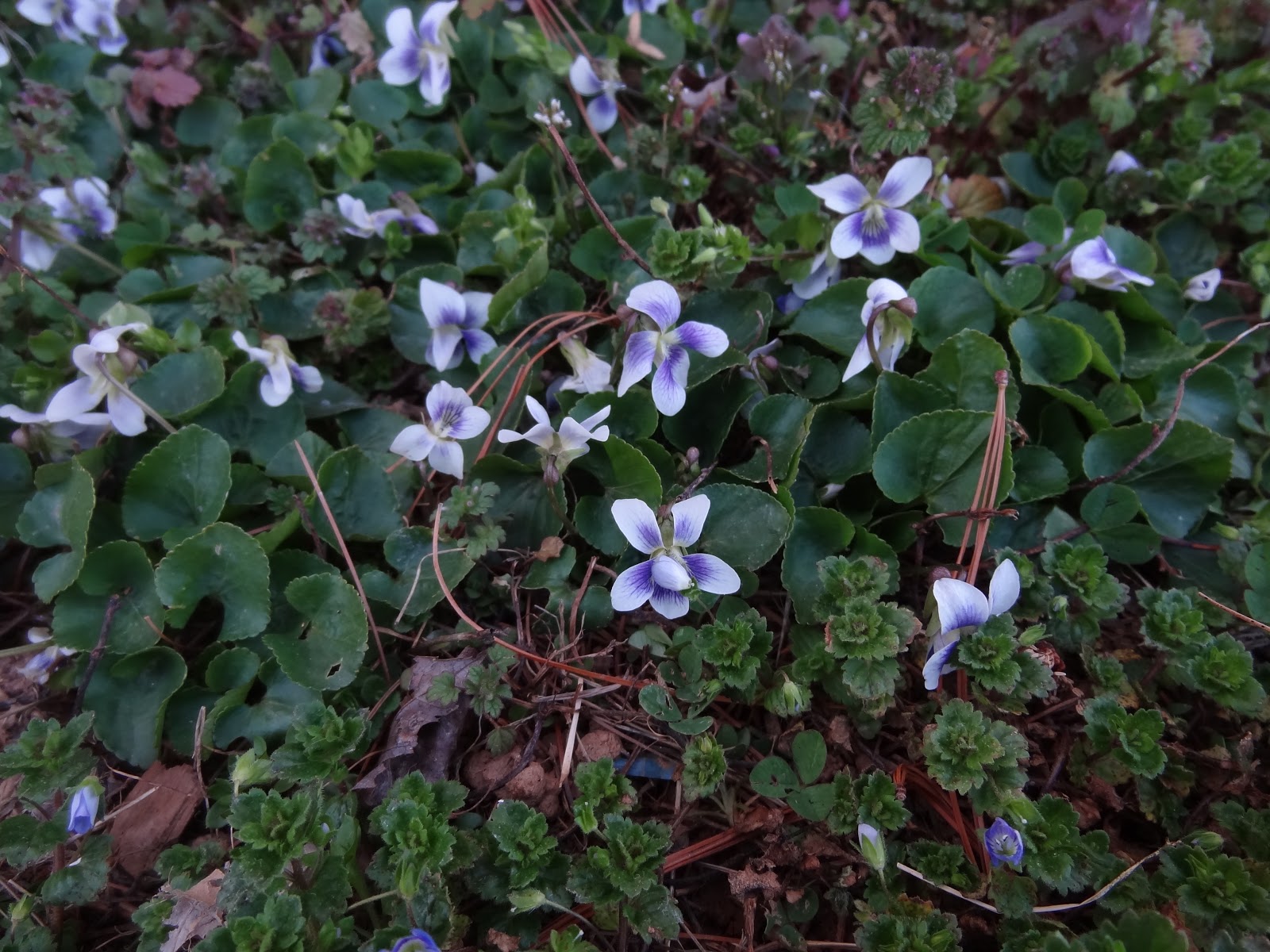
Violets


The lilac bush is budding.


The unnamed bush is blooming.


Forsythia


Junco. Juncos actually come here for the winter and return to colder places for the summer. This is not a sign of spring, but I just like juncos.


Ornamental plum.


Extra points if you can identify the white and grey round object.


Monday, April 9, 2018

H is for Hold Still

or Hold on, this gets a bit creepy.

So the theme of this post was holding still for a photograph. I was going to talk about how it is especially hard for kids and compare pictures of a little Wally with Prince George and how they were both trying to walk away in their family portraits.

Then I was going to use this as a lead in to a picture of my great, great grandmother, Anna, and how in her day they had to hold still for so long for a photo that they had stands to help with that. The interesting thing was going to be that you could see evidence one of these stands with the black bump on top of her head in the picture. Usually the stands were hidden behind hats or hair. But when I looked into the details, things didn't quite stand up. (Pun intended.)

First a bit of photography history that caused the confusion. The first photograph in 1826 took 8 hours of exposure and by Civil War time in the mid-1800s the time was down to 3 seconds. By the late 1800s and early 1900s, exposure time needed was under 1 second and they were starting to take snapshots. Anna was born in 1845 and died in 1926. So for most of her later life, photographs were taken quick enough that under normal circumstances, she shouldn't have needed any extra assistance from something like a stand.

Then things turned strange and a bit morbid. While researching the stands, I learned that it was common to use them during Victorian times (late 1800s-early 1900s) to take pictures of dead people.* We don't know when this photograph of Anna was taken, but it looks like she was at least 60 and more likely in her 70s. That would make it likely that photo was taken in the 1900s well after the time that stands were needed for pictures. That begged the question, "Was this a picture of a dead Great, Great Grandma Anna?"

I promptly called Mary Ellen, my sister who is into genealogy, and asked her what she knew about the picture and did she think it was possible this was a post-mortem picture? She was sure that it wasn't, but had no evidence to support it. We both felt that that Anna was alive when the picture was taken, but circumstantial evidence suggested other possibilities.

Next step was to show the picture to Ward and Theo and get their opinion. They studied the photo carefully and said her eyes had too much expression in them to be from a dead person. So I conclued that she was alive in this picture and I had let my imagination get away with me.

What do you think?

*Lots of discussion on the internet whether this is true or not. The best I could sort out is that the practice did happen, but not everyone with a stand in the picture is dead as many believe. The timing of this picture is what raised my question.

But wait there's more:
Reasons Anna could be using a stand for the photo when stands were not common place any more.
1. The photographer was using an old camera.
2. The photographer believed that even with new equipment, that was still the best way to do things.
3. Anna had back problems and sitting up straight for the photo was a problem.
4. That's not really the top of a stand, but something else.
5. ?